Cognitive Vitality
Your mind deserves the same attention as your body
Some changes in memory and processing speed are a normal part of aging, and they're not a sign that something is wrong. But just as your muscles need exercise to stay strong, your brain needs stimulation to stay sharp. The good news: cognitive decline is not inevitable, and there's a great deal you can do to maintain and even improve mental function at any age.
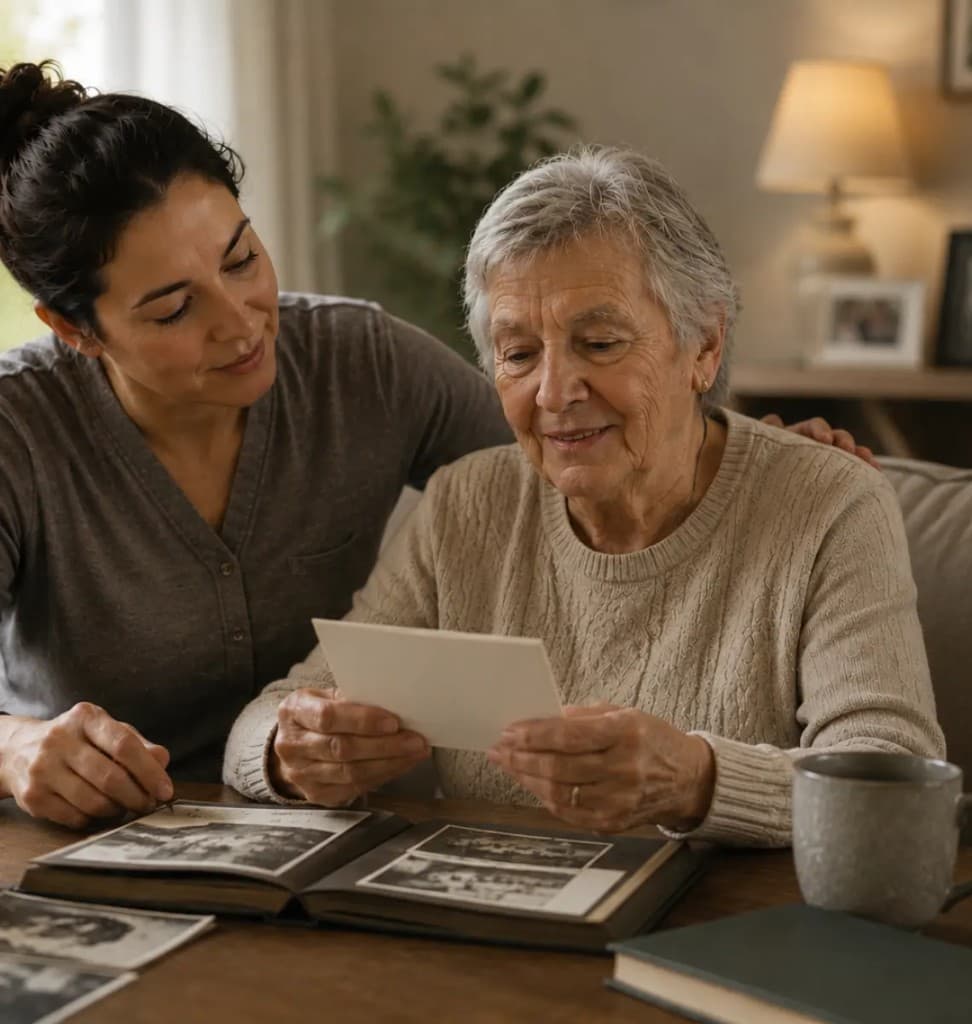
Arcadia Rehab's cognitive vitality programs combine brain exercises, dual-task training (which bridges physical and cognitive function), memory strategies, and social engagement activities. Our RSTs work with seniors in their homes to build programs that support both mind and body, because the research is clear that the two are deeply connected.
Our approach
How we support cognitive vitality
Dual-task training
Walking while counting, balancing while reciting, exercises that challenge both body and brain simultaneously. Research shows dual-task training improves cognitive function and reduces fall risk.
Memory strategy exercises
Practical techniques for improving recall: association methods, visualization, spaced repetition, and organizational strategies that support medication management and daily planning.
Problem-solving activities
Structured activities that maintain executive function: planning, sequencing, decision-making, and adapting to new situations (the cognitive skills that underpin independent living).
Social cognition & engagement
Group activities and conversation-based exercises that maintain social cognitive skills, prevent isolation, and support emotional well-being.
The research
Physical exercise is cognitive medicine
Research from major universities and published in journals like The Lancet and JAMA Neurology consistently shows that regular aerobic exercise reduces the risk of cognitive decline by 20-30%. Physical activity increases blood flow to the brain, promotes neurogenesis (the growth of new brain cells), and reduces inflammation linked to dementia.
This is why Arcadia Rehab combines physical and cognitive exercise into integrated programs. A walk isn't just a walk. It becomes a dual-task exercise when you add counting, word games, or memory challenges. Every physical session is an opportunity to train your brain too.
Read more
Cognitive vitality resources
Brain Exercises for Seniors: Evidence-Based Activities That Work
Specific activities beyond "do puzzles": dual-task exercises, memory strategies, technology-assisted options.
Normal Aging vs. Dementia: What's the Difference?
Memory comparison guide on our sister site, Arcadia Home Care, for families wondering whether changes warrant a doctor's visit.
How to Keep Your Mind Sharp at 70, 80, and Beyond
Aspirational, empowering strategies for maintaining cognitive health at any age.
FAQ
Common questions
Frequently Asked Questions
While no single intervention can guarantee dementia prevention, research consistently shows that cognitive stimulation, physical exercise, social engagement, and cardiovascular health all contribute to reducing dementia risk. The combination of physical and cognitive exercise (which is central to Arcadia Rehab's approach) is among the most evidence-supported strategies.
Some forgetfulness is normal with age. Concerning signs include forgetting what everyday objects are for, getting lost in familiar places, or difficulty with tasks you've done for years. For a full comparison written for families, see Arcadia Home Care's guide to normal aging vs. dementia. Regardless of category, cognitive and physical exercise support brain health.
Aerobic exercise increases blood flow to the brain, promotes the growth of new neurons (neurogenesis), and reduces inflammation. Studies show that regular physical activity reduces the risk of cognitive decline by 20-30%. At Arcadia Rehab, we combine physical and cognitive exercise for maximum benefit.
Some research supports specific types of computer-based cognitive training, but the evidence is mixed for commercial brain training apps. The most effective cognitive exercises are those that combine physical movement with mental challenges, maintain social engagement, and translate to real-world daily living skills, which is what our RSTs focus on.
Occasional forgetfulness is normal at any age. Seek professional evaluation if your parent: repeatedly asks the same questions, gets lost in familiar places, has difficulty managing finances or medications they previously handled, shows significant personality changes, or struggles with basic daily tasks they used to perform easily.
Start a cognitive vitality programme
An Arcadia Rehab therapist will design a combined physical and cognitive programme tailored to what matters most to you.