How It Works
What happens after you call
You call. We talk. An RST comes to your parent's home. A programme begins.
No referral needed. No insurance paperwork. No waitlist. Here's exactly what each step looks like.
Step by step
Five steps, start to finish
We talk
Call us or fill out the contact form. We have a 15-20 minute conversation about your parent's situation: what they want to keep doing, what's getting harder, and what you're hoping to change. No commitment, no pressure.
This call helps us determine whether Arcadia Rehab is the right fit. If your parent needs daily living support (bathing, dressing, meals), we'll point you to our Home Care team instead.
We come to you
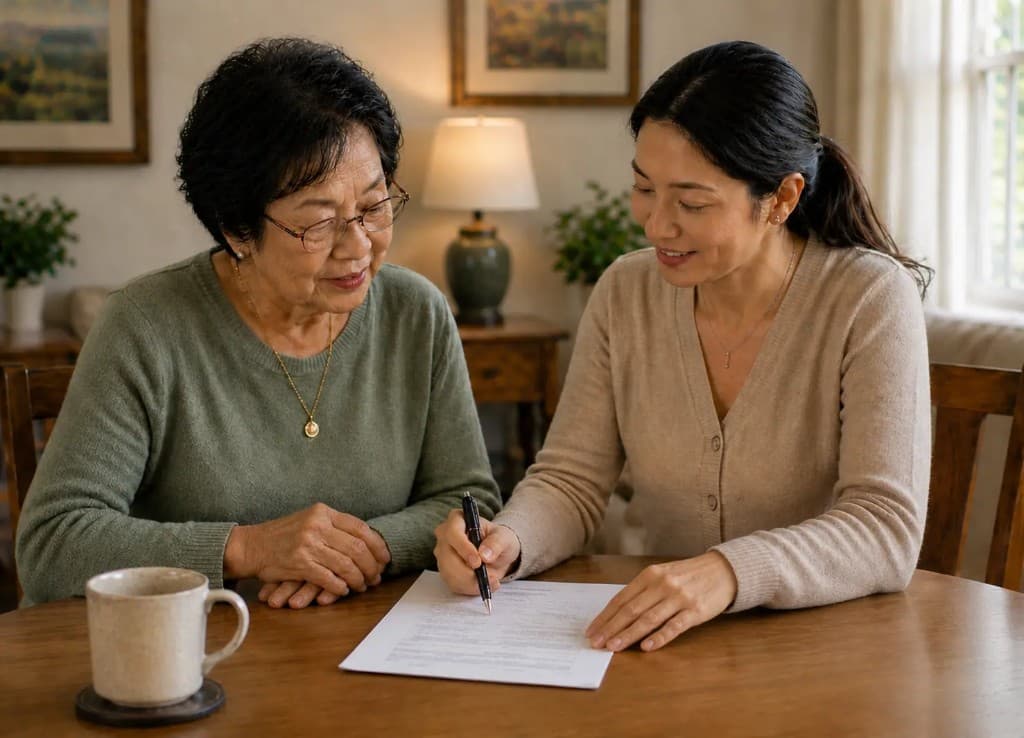
An RST visits your parent at home for a 60-90 minute assessment. We look at strength, balance, mobility, and the home environment. We also ask about goals: not clinical targets, but the daily things that matter. What does your parent want to keep doing?
Family members are welcome and encouraged to attend. The more we understand about daily life at home, the better the programme we can design.
We design the programme
Your RST maps every exercise to a specific daily living outcome. Balance work to stay safe in the shower. Strength training to keep cooking. Cognitive exercises to manage medications independently. Every exercise has a reason.
You receive a clear written outline: which exercises, how often, and what outcomes to expect. Nothing vague.
Sessions start
Your RST arrives on the scheduled days. Sessions are 45-60 minutes, typically two to three times per week. Each one includes a warm-up, targeted exercises, and a quick progress check before we leave.
Sessions adapt over time. We adjust timing, frequency, and intensity based on how your parent responds and what's changing in their life.
We track what changes
Progress is measured against the daily living outcomes that actually matter: Can your parent stand longer at the stove? Walk further without stopping? Get up from a chair without using their hands? We report back to the family regularly.
Programmes are updated as your parent gets stronger. The aim is continuous, practical improvement toward independence.
Good to know
A few things worth knowing
No referral needed
Arcadia Rehab is a private-pay service. You contact us directly. No doctor's referral, no insurance authorization, no waiting for a case manager to approve anything.
Separate from Arcadia Home Care
Arcadia Rehab and Arcadia Home Care are sister services with separate phone lines and intake processes. Rehab is for exercise and independence. Home Care is for daily living support like bathing and dressing. Both are available; which you need depends on your parent's situation.
Flexible scheduling
Sessions work around your parent's routine. Morning, afternoon, or early evening. We schedule around what already exists in their week, not the other way around.
Family involvement welcome
You are encouraged to attend the initial assessment and periodic check-ins. The more the family understands what the programme is working toward, the better the outcomes.
FAQ
Common questions
Frequently Asked Questions
No. Arcadia Rehab is a private-pay service. You call us directly and we begin the process from there. No referral, no insurance authorization, no waitlist.
Most families have a consultation call within a few days of contacting us. The in-home assessment is typically scheduled within one to two weeks. Sessions can begin shortly after that, depending on your parent's schedule and availability.
A physiotherapist treats injuries, manages post-surgical recovery, and works with all age groups. An RST (Rehabilitation Support Therapist) works exclusively with elderly clients on the exercises and strategies that preserve daily independence. RSTs are not a cheaper substitute for physio. They are a different service with a different focus: proactive strength and independence, not injury recovery.
There's no long-term contract. If after the assessment or early sessions your parent isn't comfortable, you're not locked in. We'd rather find the right fit than push a programme that isn't working.
Ready to start the conversation?
Book a free, no-commitment call. We'll help you figure out whether proactive rehabilitation is the right fit for your parent.